There are lots of reasons one might consider a heat pump. For Denver homeowner Tim Williams, it came down to a simple reality: His home just wasn’t as comfortable as it could be.
Tim and his wife live in a 1969 tri-level home that still had its original windows and very little insulation, making it drafty year-round. The air conditioning system was also 25+ years old and beginning to fail. Motivated by the comfort and efficiency a heat pump could provide, Tim knew it was time to make a change.
Still, he had one major hesitation. Like many homeowners in Colorado, Tim heard that heat pumps didn’t work well in cold climates. So before making any decisions, he started researching. What he found surprised him. Modern cold-climate heat pumps could continue operating even when temperatures drop to -14 degrees Fahrenheit.
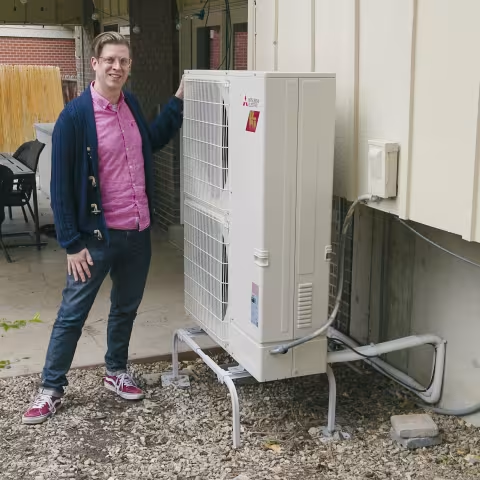
With that concern resolved, Tim started looking into contractors. He narrowed the options down to four companies with strong recent reviews and ultimately received nine different proposals. Quotes ranged from $13,000 all the way to $36,000, reinforcing just how important it is to gather multiple estimates and ask questions throughout the process.
“You are spending a lot of money no matter what you do. Make the choice that gives you the most efficiency and flexibility, and that is most future-proofed.”
He also found that some contractors had a much stronger understanding of rebates and incentives than others, which became a major factor in his decision. “You are spending a lot of money no matter what you do,” Tim says. “Make the choice that gives you the most efficiency and flexibility, and that is most future-proofed.”
The installation process was far easier than he expected. Most of the work was completed in just two days and with minimal disruption to the home. And with rebates from Denver and Xcel Energy covering roughly 30% of the project cost (not including additional federal tax incentives), Tim’s upfront cost came to around $15,000. While that’s a significant investment, Tim notes that the cost is comparable to what he would have spent on a new air conditioner and furnace. In addition to the heat pump, Tim invested in the home’s overall performance through weatherization upgrades. This included removing poor insulation from a previous install and installing extra ductwork insulation that works more efficiently. To Tim, this is where the real energy savings came in.
“Heat pumps solved our problem, and I think they could help other people, too.”
Now, the house feels consistently comfortable, and the new system runs far quieter than the old one. Tim also appreciates the flexibility of the setup. He decided to leave his old furnace in place as a backup for the heat pump rather than removing it before it was needed. The old furnace gives the home heating flexibility and now only runs a few hours each winter. And, having already installed solar panels on his home, he can now take better advantage of the energy his home is already producing with a heat pump. “Heat pumps solved our problem, and I think they could help other people, too.”
For Tim, the upgrade wasn’t just about replacing old equipment. It was about creating a home that’s more comfortable today, and better prepared for tomorrow.