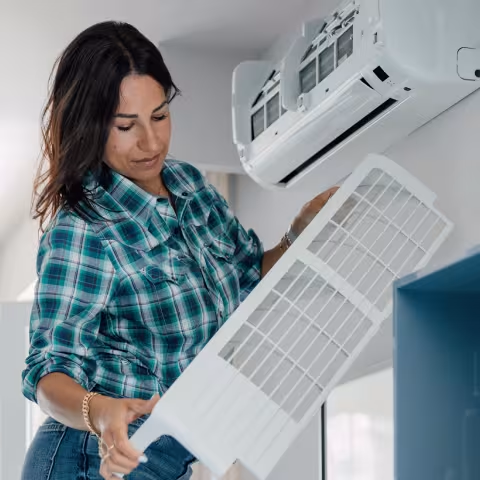
A heat pump doesn’t need constant attention, but a little care goes a long way. Thoughtful ongoing maintenance can help you stay comfortable, avoid unnecessary repairs, and extend the life of your equipment.
Routine maintenance
Prevent avoidable issues between professional maintenance visits by tuning in to a few simple DIY upkeep tips.
Keep filters clean.
Heat pumps improve indoor air quality by filtering the air in your home. To keep the air clean and your system running well, check your heat pump’s filters about once a month and clean or replace them when they look dirty. Refer to your equipment owner’s manual to learn how to safely access and care for your filters.
Maintain good indoor airflow.
Double-check your heat pump’s air handler or duct vents to ensure air flows freely. Be sure you’re not blocking airflow with furniture, curtains, or rugs. Even small obstructions can reduce your unit’s ability to operate efficiently and keep you comfortable.
Ensure the outdoor unit is free of obstructions.
Weeds, leaves, and other wind-blown debris can gather around your heat pump’s outdoor unit. Carefully clear the area to keep trash out of the unit and ensure air can come and go as needed. Note that it’s also best to avoid any aesthetic alterations or additions that may impede airflow.
Seasonal maintenance
Developing a few seasonal habits will help your heat pump start each heating or cooling season strong.
Spring: Prep for hot weather.
Clear away any debris that has accumulated around the outdoor unit. Inside, check that vents are sufficiently open and that your heat pump’s filters are clean.
Fall: Prep for cold weather.
Time to clean those filters again. And since heat rises, make sure your heat pump’s indoor vents point downward to maximize warmth. Cut back any plants that may have grown around the outdoor unit.
Consider these Colorado cold-weather tips:
- Your outdoor unit will melt frost from its coil during the defrost cycle. However, if ice surrounds the coil and stays there, carefully remove it or call a professional for help.
- Piled-up snow can interfere with a heat pump’s normal function. Taking care not to bump the coil, remove snow accumulation from all sides of your outdoor unit.
- In especially windy areas, a manufacturer-approved wind baffle may help your system operate at its best.
Professional maintenance
Even with good routine care, a yearly checkup can help keep your system operating at its best.
Schedule annual service visits.
Your technician will inspect refrigerant levels, drainage, blower components, system controls, and electrical connections. They’ll also clean the indoor and outdoor coils. This work is important, as dirt and dust can build up over time. Keeping your heat pump’s coils clean is key to steady airflow, lower energy use, and long-term reliability.
Have ductwork? Get it inspected and sealed.
While mini splits deliver warm or cool air directly through an air handler, ducted heat pumps rely on clean, well-sealed ductwork to move air through a home. Over time, ducts can collect dust and debris — especially if they run through crawlspaces, attics, or garages. While duct cleaning doesn’t need to be done often, when it’s needed, it should be paired with duct sealing. Well-sealed ducts stay cleaner longer and help your system maintain steady airflow.
Watch for signs that suggest it’s time to call a professional.
While a well-installed heat pump doesn’t require much beyond filter maintenance and annual service, there are still a few things to watch for. If your heat pump shows any of the following symptoms, consider bringing in a professional:
- Oily residue: Oil on or near the indoor coil or the unit’s copper lines may suggest a refrigerant leak.
- Error codes: System codes that can’t be resolved using the owner’s manual may indicate a component failure requiring professional attention.
- Dripping water: Water leaking from the indoor unit can mean a clogged drain or related issue.
- Unusual odors: Smells coming from the indoor unit can signal electrical issues, mold growth, or other problems.
- Debris in the coil: Any foreign object lodged in your unit’s coils should be removed with special care so as not to damage their delicate aluminum fins.
- New noises: Grinding, rattling, or other unfamiliar sounds should be promptly examined by a professional.
We're here to help.
You’ve got this! Still, if you’re unsure about an issue with your heat pump, rest easy knowing a Power Ahead Colorado Energy Advisor can point you toward a solution. Reach out to a member of our team at 1-844-303-9333 or send a message.